


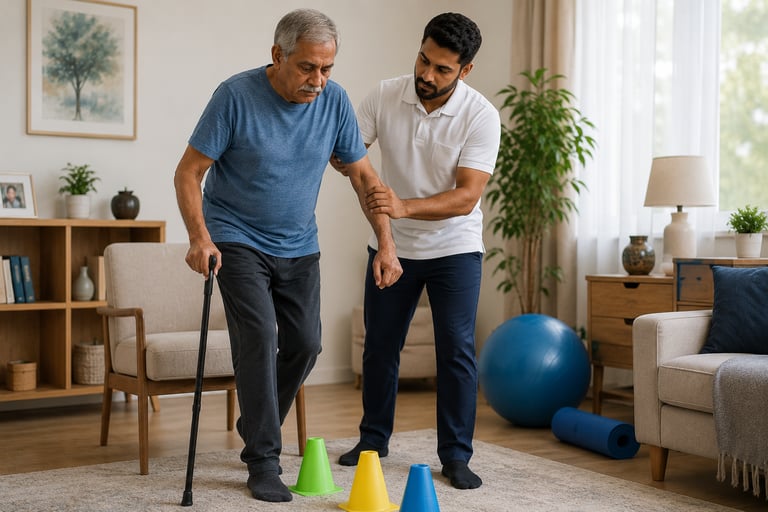

Home Visiting Physiotherapist For Parkinson's Disease
Living with Parkinson's disease can make everyday activities such as walking, getting out of a chair, climbing stairs, dressing, and maintaining balance increasingly challenging. Although Parkinson's disease is a progressive neurological condition, physiotherapy plays a vital role in helping people remain active, independent, and confident for as long as possible.
At Physio Network, we provide expert home-based Parkinson's disease physiotherapy throughout Hertfordshire, including Hitchin, Letchworth Garden City, Stevenage, Biggleswade, Baldock, Arlesey, Welwyn Garden City, Hertford, Ware and Harlow. Our experienced physiotherapists deliver personalised rehabilitation programmes in the comfort of your own home, focusing on improving mobility, reducing falls, maintaining independence, and enhancing quality of life.
What is Parkinson's Disease?
Parkinson's disease is a progressive neurological disorder caused by the gradual loss of dopamine-producing nerve cells in the brain. Dopamine is essential for controlling smooth, coordinated movement. As dopamine levels decrease, movement becomes slower, stiffer, and less coordinated.
Symptoms usually develop gradually and vary from person to person. While there is currently no cure, medication combined with regular physiotherapy and exercise can significantly improve mobility, function, and overall wellbeing.
Common Symptoms of Parkinson's Disease
People with Parkinson's disease may experience:
Tremor (shaking), usually beginning in one hand
Slowness of movement (bradykinesia)
Muscle stiffness and rigidity
Difficulty walking
Reduced arm swing while walking
Shuffling gait
Freezing episodes
Poor balance
Increased risk of falls
Difficulty turning in bed
Problems getting up from a chair
Stooped posture
Reduced coordination
Fatigue
Reduced confidence with mobility
As the condition progresses, these symptoms can affect daily activities and independence.
Causes and Risk Factors
The exact cause of Parkinson's disease is unknown, but several factors are thought to contribute, including:
Increasing age
Genetic factors
Family history
Environmental factors
Exposure to certain toxins (rarely)
Parkinson's disease is not contagious and cannot be prevented, but early diagnosis and rehabilitation can help manage symptoms effectively.
Why Choose Home Physiotherapy for Parkinson's Disease?
Home physiotherapy allows treatment to focus on the challenges you face in your everyday environment. Practising movement in familiar surroundings makes rehabilitation more meaningful and helps improve confidence with daily tasks.
Benefits include:
Personalised one-to-one treatment
Rehabilitation in your own home
Functional training using your own furniture and surroundings
Reduced need for travel
Family and carer involvement
Home safety assessments
Falls prevention strategies
Flexible appointment times
How Physiotherapy Helps Parkinson's Disease
Physiotherapy is a key part of managing Parkinson's disease. Regular exercise and movement training can help maintain mobility, reduce stiffness, improve balance, and slow functional decline.
Our treatment aims to:
Improve walking ability
Increase movement speed
Improve posture
Maintain flexibility
Enhance balance
Improve strength
Reduce freezing episodes
Increase confidence
Reduce falls
Improve endurance
Maintain independence in daily activities
Common Problems We Treat
Walking Difficulties
People with Parkinson's disease often develop slower, shorter steps and reduced arm swing. Our physiotherapists provide gait retraining to improve walking speed, step length, posture, and confidence.
Freezing of Gait
Freezing occurs when the feet temporarily feel "stuck" to the floor, making it difficult to start walking or turn. We teach cueing techniques, movement strategies, and exercises to help reduce freezing episodes.
Balance Problems
Poor balance is a major cause of falls in Parkinson's disease. We use progressive balance training to improve stability during standing, walking, turning, and reaching.
Muscle Stiffness and Rigidity
Stiff muscles can limit movement and make everyday tasks more difficult. Physiotherapy includes stretching, mobility exercises, and movement techniques to improve flexibility and reduce stiffness.
Postural Changes
A stooped posture can affect breathing, walking, and balance. We provide posture correction exercises, spinal mobility training, and strengthening exercises to improve alignment.
Difficulty with Transfers
Getting out of bed, standing up from a chair, or getting into a car may become increasingly difficult. We teach safe movement techniques and practise functional transfers to improve independence.
Reduced Strength
Loss of muscle strength contributes to reduced mobility and slower movement. Progressive strengthening exercises help maintain function and support everyday activities.
Reduced Endurance
Fatigue is common in Parkinson's disease. Our rehabilitation programme gradually improves cardiovascular fitness and activity tolerance while helping patients pace their activities effectively.
Falls Prevention
Falls are common due to balance problems and freezing episodes. We assess fall risks, improve movement strategies, and recommend practical ways to make the home environment safer.
Our Home Physiotherapy Assessment
During your first appointment, our physiotherapist will complete a detailed assessment, including:
Medical and neurological history
Parkinson's symptoms
Medication timing and movement fluctuations
Walking assessment
Balance assessment
Muscle strength
Flexibility
Posture assessment
Functional mobility
Transfer assessment
Falls risk assessment
Home environment assessment
Personal rehabilitation goals
Following the assessment, we will develop a personalised treatment plan tailored to your needs and stage of Parkinson's disease.
Physiotherapy Management at Home
Every rehabilitation programme is individualised and designed to help you remain as active and independent as possible.
Treatment may include:
Gait Training
Improving walking speed, step length, arm swing, turning, and confidence while reducing shuffling.
Cueing Techniques
Using visual, auditory, and rhythmic cues to overcome freezing episodes and improve movement initiation.
Balance Rehabilitation
Exercises to improve static and dynamic balance, reducing the risk of falls.
Strengthening Exercises
Progressive resistance exercises to improve muscle strength and functional performance.
Flexibility and Stretching
Exercises to reduce muscle stiffness, improve joint mobility, and maintain movement.
Postural Exercises
Strengthening and mobility exercises to improve posture, spinal alignment, and breathing.
Functional Training
Practising everyday activities such as standing up, sitting down, bed mobility, stair climbing, and transfers.
Dual Task Training
Exercises that combine movement with cognitive tasks to improve coordination and mobility during everyday activities.
Endurance Training
Gradually increasing activity levels to improve fitness, walking distance, and reduce fatigue.
Falls Prevention
Education on safe movement strategies, appropriate walking aids, home modifications, and reducing fall risks.
Home Exercise Programme
You will receive an individualised exercise programme designed to maintain progress between physiotherapy sessions and encourage long-term physical activity.
Benefits of Regular Physiotherapy
Regular physiotherapy can help:
Improve walking ability
Reduce stiffness
Improve posture
Increase balance
Reduce falls
Improve flexibility
Maintain independence
Improve confidence
Enhance quality of life
Support long-term mobility
Why Choose Physio Network?
HCPC-registered physiotherapists
Experienced in neurological rehabilitation
Specialist home-based physiotherapy
One-to-one personalised care
Evidence-based treatment programmes
Goal-focused rehabilitation
Flexible appointments
Family and carer education
Comprehensive home mobility assessments
Serving patients across Hertfordshire
Begin Your Parkinson's Rehabilitation at Home
Although Parkinson's disease is a lifelong condition, the right physiotherapy can help you stay mobile, independent, and confident for longer. Early intervention and regular exercise are key to maintaining function and improving quality of life.
At Physio Network, we are committed to providing compassionate, personalised home physiotherapy tailored to your individual needs and goals.
Book your home Parkinson's disease physiotherapy assessment today and take the next step towards safer movement, greater independence, and improved quality of life.


E-mail : info@physionetwork.co.uk
Professional Home Physiotherapy Services Across Hertfordshire
© 2026 Physio Network UK. All Rights Reserved.
HCPC Registered Physiotherapist | NHS Experienced | DBS Checked | Fully Insured