
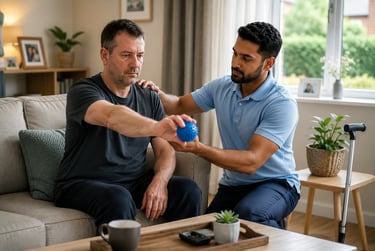
Home Visiting Physiotherapist For Brain Injury Rehabilitation
A brain injury can have a profound impact on movement, balance, strength, coordination, and independence. Whether the injury is caused by trauma, surgery, lack of oxygen, or another neurological event, rehabilitation is essential for helping individuals regain function and achieve the highest possible level of independence.
At Physio Network, we provide expert home-based brain injury rehabilitation across Hertfordshire. Our experienced physiotherapists deliver personalised rehabilitation programmes in the comfort of your own home in Hertfordshire, including Hitchin, Letchworth Garden City, Stevenage, Biggleswade, Baldock, Arlesey, Welwyn Garden City, Hertford, Ware and Harlow, helping you improve mobility, rebuild confidence, and return to meaningful daily activities.
Whether you are recovering from a recent brain injury or living with long-term effects, we tailor every treatment programme to your individual needs and rehabilitation goals.
What is a Brain Injury?
A brain injury occurs when damage to the brain affects its ability to control movement, sensation, balance, coordination, thinking, behaviour, or communication. Brain injuries can range from mild to severe and may have lasting physical, cognitive, and emotional effects.
Physiotherapy focuses on improving physical function, restoring movement, and promoting recovery through repetitive, task-specific rehabilitation that encourages the brain to adapt and relearn skills.
Common Causes of Brain Injury
Brain injuries can occur due to various reasons, including:
Traumatic brain injury (TBI) following a fall, road traffic accident, or sporting injury
Lack of oxygen to the brain (hypoxic brain injury)
Brain haemorrhage
Brain tumour and related surgery
Brain infections such as encephalitis or meningitis
Cardiac arrest leading to reduced oxygen supply
Neurological complications following major illness
Regardless of the cause, rehabilitation plays a crucial role in improving recovery and long-term function.
Common Symptoms After a Brain Injury
Symptoms vary depending on the area and severity of the injury but may include:
Muscle weakness
Difficulty walking
Poor balance
Reduced coordination
Muscle stiffness or spasticity
Difficulty using an arm or hand
Reduced endurance
Fatigue
Difficulty with transfers
Joint stiffness
Tremors
Reduced mobility
Increased risk of falls
Postural problems
Difficulty performing everyday activities
Some people may also experience changes in memory, concentration, speech, behaviour, or communication, which may require input from other healthcare professionals as part of a multidisciplinary team.
Why Choose Home Brain Injury Rehabilitation?
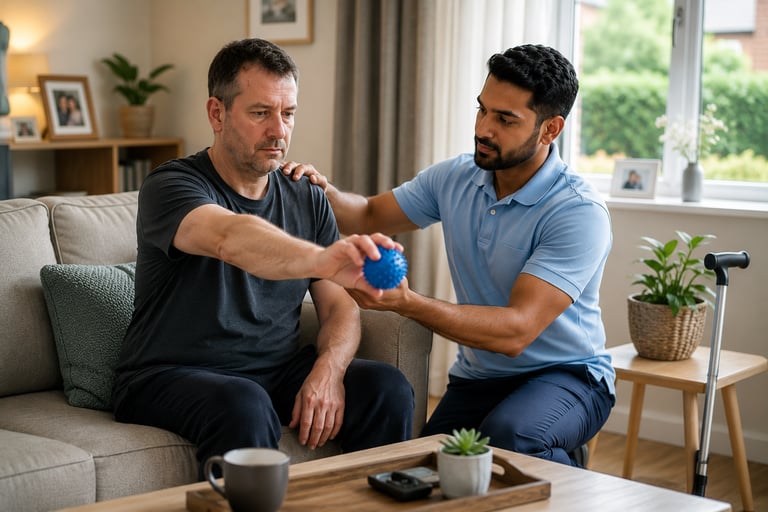
Rehabilitation at home allows treatment to focus on the everyday activities and environments that matter most to you. Practising real-life tasks within familiar surroundings often leads to greater confidence and more meaningful improvements.
Benefits of home physiotherapy include:
Personalised one-to-one rehabilitation
Treatment in familiar surroundings
Functional training using your own home environment
Reduced need for travel
Family and carer involvement
Home safety assessments
Falls prevention strategies
Flexible appointment scheduling
How Physiotherapy Helps After a Brain Injury
Physiotherapy is a key part of brain injury rehabilitation and aims to maximise recovery by improving physical function and encouraging the brain to develop new movement patterns through neuroplasticity.
Treatment aims to:
Improve walking ability
Increase muscle strength
Improve balance
Enhance coordination
Reduce muscle stiffness
Improve posture
Increase endurance
Improve functional mobility
Reduce the risk of falls
Increase confidence
Maximise independence
Early and consistent rehabilitation often leads to the best outcomes.
Common Problems We Treat
Muscle Weakness
Brain injuries often result in weakness affecting one or both sides of the body. We provide progressive strengthening exercises and functional retraining to improve movement and independence.
Walking Difficulties
Walking may become slow, unsteady, or require assistance following a brain injury. Our physiotherapists provide gait retraining to improve walking speed, confidence, endurance, and safety.
Balance Problems
Poor balance significantly increases the risk of falls. We deliver progressive balance rehabilitation to improve stability during standing, walking, turning, and reaching.
Muscle Stiffness and Spasticity
Increased muscle tone can restrict movement and make everyday activities difficult. Stretching, positioning, and movement therapy help improve flexibility and reduce stiffness.
Reduced Coordination
Difficulty controlling movements may affect walking, reaching, and fine motor activities. Targeted coordination exercises help improve movement quality and functional ability.
Upper Limb Rehabilitation
Weakness or reduced control of the arm and hand can affect daily activities such as dressing, eating, and personal care. We provide exercises to improve strength, coordination, and functional use of the upper limb.
Reduced Endurance
Fatigue is common after a brain injury. Our rehabilitation programme gradually builds physical endurance and improves activity tolerance while avoiding overexertion.
Difficulty with Transfers
Getting in and out of bed, standing from a chair, or moving safely around the home may become challenging. We teach safe transfer techniques and functional movement strategies.
Falls Prevention
Reduced strength, balance, and coordination increase the risk of falls. We assess mobility, identify hazards, and provide practical advice to improve safety at home.
Our Home Physiotherapy Assessment
During your first visit, our physiotherapist will complete a comprehensive assessment that includes:
Medical and injury history
Current symptoms
Muscle strength assessment
Range of movement assessment
Walking assessment
Balance assessment
Coordination assessment
Functional mobility assessment
Transfer assessment
Postural assessment
Falls risk assessment
Home environment assessment
Personal rehabilitation goals
Following the assessment, we will develop an individualised treatment plan designed around your current abilities and recovery goals.
Physiotherapy Management at Home
Our evidence-based rehabilitation programmes are tailored to your individual needs and adjusted as you progress.
Treatment may include:
Functional Mobility Training
Practising everyday activities such as bed mobility, standing, walking, stair climbing, and transfers to improve independence.
Gait Re-education
Improving walking pattern, speed, endurance, and confidence using appropriate walking aids if required.
Strengthening Exercises
Progressive exercises to improve muscle strength and support functional movement.
Balance Rehabilitation
Exercises to improve postural control, weight shifting, and dynamic balance during daily activities.
Stretching and Range of Movement Exercises
Maintaining joint mobility, reducing stiffness, and preventing muscle shortening.
Coordination Training
Task-specific exercises that improve movement control, accuracy, and functional performance.
Upper Limb Rehabilitation
Exercises to improve shoulder, arm, wrist, and hand movement, helping you perform everyday tasks more independently.
Endurance Training
Graded exercise programmes designed to improve stamina, cardiovascular fitness, and overall physical capacity.
Falls Prevention Education
Advice on safe mobility, home modifications, walking aids, and reducing environmental hazards to minimise the risk of falls.
Home Exercise Programme
Every patient receives a personalised home exercise programme with clear guidance, ensuring continued progress between physiotherapy sessions.
Benefits of Brain Injury Rehabilitation
Regular physiotherapy can help:
Improve mobility
Increase muscle strength
Improve walking ability
Enhance balance
Improve coordination
Reduce stiffness
Increase endurance
Improve confidence
Reduce the risk of falls
Maximise independence
Enhance quality of life
Why Choose Physio Network?
HCPC-registered physiotherapists
Experienced in neurological rehabilitation
Personalised one-to-one home visits
Evidence-based treatment programmes
Goal-focused rehabilitation
Flexible appointments
Family and carer education
Ongoing progress reviews
Comprehensive home mobility assessments
Serving patients across Hertfordshire
Start Your Brain Injury Rehabilitation at Home
Recovery after a brain injury is a journey that requires expert guidance, patience, and consistent rehabilitation. With the right physiotherapy programme, many people can improve their mobility, regain independence, and rebuild confidence in everyday life.
At Physio Network, we are committed to delivering compassionate, evidence-based home physiotherapy tailored to your individual goals and recovery needs.
Book your home brain injury rehabilitation assessment today and let our experienced physiotherapists support your recovery, helping you move more confidently and achieve your greatest level of independence.
E-mail : info@physionetwork.co.uk
Professional Home Physiotherapy Services Across Hertfordshire
© 2026 Physio Network UK. All Rights Reserved.
HCPC Registered Physiotherapist | NHS Experienced | DBS Checked | Fully Insured