
Home visiting physiotherapists for spinal cord injury rehabilitation
Spinal cord injury (SCI) affects movement, strength, and independence. Discover how home-based rehabilitation can enhance recovery, prevent complications, and improve life quality after discharge from the hospital. We are the best Home visiting physiotherapists for spinal cord injury rehabilitation
7/21/20264 min read
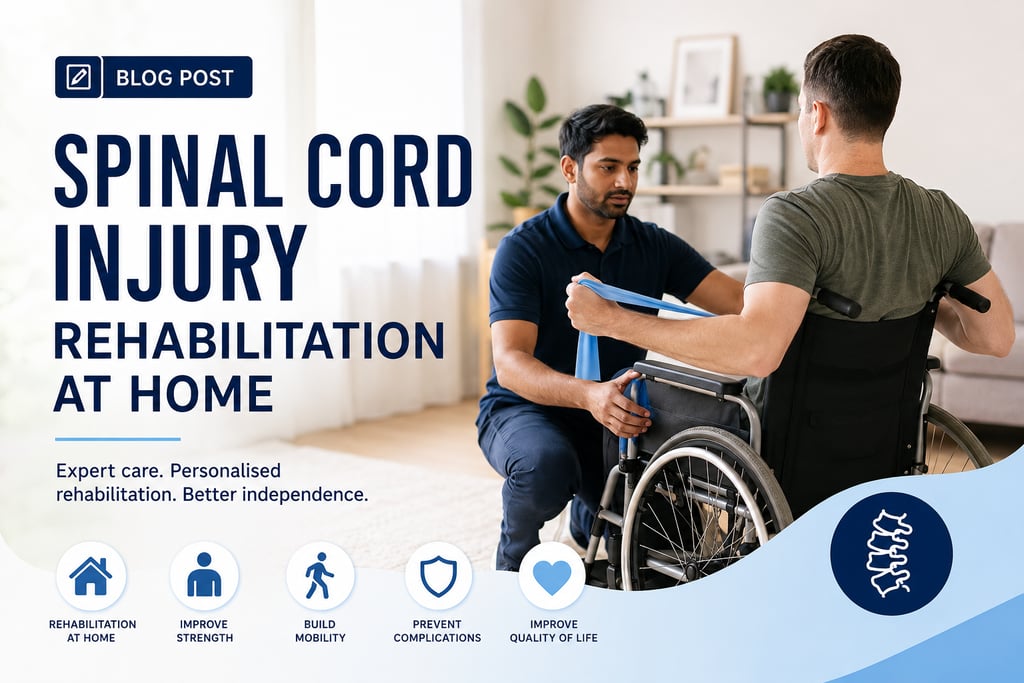
Spinal Cord Injury Rehabilitation at Home: A Complete Guide to Safe Recovery and Independence
A spinal cord injury (SCI) can change every aspect of daily life, affecting movement, strength, sensation, balance, and independence. While hospital care and specialist rehabilitation are essential in the early stages, recovery does not stop after discharge. Home-based spinal cord injury rehabilitation plays a crucial role in helping individuals regain function, prevent complications, and improve their quality of life.
At Physio Network, we provide professional home physiotherapy across Hertfordshire, helping people with spinal cord injuries recover safely in the comfort of their own homes.
What Is a Spinal Cord Injury?
A spinal cord injury occurs when damage to the spinal cord disrupts communication between the brain and the body. Depending on the level and severity of the injury, it can cause:
Weakness or paralysis
Loss of sensation
Reduced balance and coordination
Muscle stiffness (spasticity)
Pain
Bladder and bowel dysfunction
Reduced independence with daily activities
The effects vary significantly between individuals, making personalised rehabilitation essential.
Why Continue Rehabilitation at Home?
Leaving hospital does not mean rehabilitation is complete. Many people make significant progress during the months and years following a spinal cord injury.
Home rehabilitation allows you to:
Continue improving mobility
Build strength safely
Learn practical strategies for everyday activities
Increase confidence
Reduce the risk of secondary complications
Improve long-term independence
Regular physiotherapy can make a meaningful difference regardless of how long ago the injury occurred.
Benefits of Home Physiotherapy
Receiving treatment at home offers several advantages.
Rehabilitation in Your Real Environment
Exercises and mobility practice take place where you actually live. This makes rehabilitation more practical and meaningful.
Your physiotherapist can assess:
Stairs
Bathrooms
Bedrooms
Kitchen access
Entrances
Garden access
Small changes to the home environment can greatly improve safety and independence.
Personalised One-to-One Treatment
Unlike busy outpatient clinics, home visits provide uninterrupted, individualised care.
Treatment is tailored to your:
Level of spinal injury
Current mobility
Personal goals
Medical condition
Equipment available
Home environment
Reduced Travel Stress
Travelling after a spinal cord injury can be exhausting and difficult.
Home visits eliminate:
Transport arrangements
Long waiting times
Accessibility concerns
Fatigue from travelling
Instead, all rehabilitation takes place in familiar surroundings.
What Does Home Rehabilitation Include?
Every programme is different, but treatment may include the following.
Mobility Training
Your physiotherapist will help improve:
Bed mobility
Rolling
Sitting balance
Standing practice
Walking with aids
Wheelchair mobility
Safe transfers
The aim is to maximise independence while ensuring safety.
Strengthening Exercises
Muscles become weaker following prolonged inactivity.
Targeted strengthening focuses on:
Core muscles
Trunk control
Arms
Legs (where appropriate)
Shoulder stability
Functional movements
Improved strength supports everyday activities and reduces fatigue.
Balance Rehabilitation
Many people experience reduced balance after SCI.
Balance training may involve:
Sitting balance exercises
Standing balance
Weight shifting
Reaching tasks
Dynamic balance activities
Functional movement practice
Better balance reduces falls and increases confidence.
Gait Training
For individuals who retain walking ability, physiotherapy helps improve:
Walking pattern
Endurance
Speed
Confidence
Stair climbing
Walking with aids
Treatment progresses according to each person's recovery.
Stretching and Spasticity Management
Muscle tightness and spasticity are common after spinal cord injury.
Physiotherapy helps:
Maintain joint flexibility
Reduce stiffness
Improve comfort
Prevent contractures
Improve movement quality
A personalised stretching programme can also be taught to family members or carers.
Functional Rehabilitation
Recovery is about more than exercise.
Physiotherapy focuses on practical daily activities such as:
Getting out of bed
Standing from a chair
Toileting
Washing
Dressing
Kitchen tasks
Household mobility
The goal is to improve real-life function.
Preventing Secondary Complications
Home rehabilitation also helps reduce complications including:
Pressure sores
Regular movement and positioning reduce prolonged pressure on vulnerable areas.
Joint stiffness
Range-of-motion exercises help maintain flexibility.
Muscle weakness
Progressive strengthening maintains muscle function.
Falls
Balance training and home safety advice reduce fall risk.
Pain
Appropriate movement and posture often reduce musculoskeletal pain associated with reduced mobility.
The Importance of Family and Carer Education
Recovery is often supported by family members or carers.
During home visits, physiotherapists can teach:
Safe transfers
Positioning techniques
Exercise assistance
Pressure relief strategies
Safe use of mobility equipment
Fall prevention
This improves confidence for everyone involved.
Rehabilitation Goals
Every patient has different priorities.
Goals may include:
Walking independently
Standing safely
Improving wheelchair skills
Climbing stairs
Returning to hobbies
Increasing confidence outdoors
Reducing reliance on carers
Improving endurance
Returning to work where possible
Goals are reviewed regularly as progress continues.
Is It Too Late to Start Physiotherapy?
No.
Research shows that people living with spinal cord injuries can continue to make functional improvements months or even years after the initial injury. While recovery may slow over time, targeted rehabilitation can still improve strength, mobility, confidence, and participation in daily life.
Who Can Benefit?
Home spinal cord injury rehabilitation is suitable for people who have:
Recent spinal cord injuries
Incomplete spinal cord injuries
Complete spinal cord injuries
Reduced mobility after surgery
Long-term neurological disability
Difficulty attending outpatient appointments
Why Choose Physio Network?
Our experienced physiotherapists provide professional home rehabilitation throughout Hertfordshire.
We offer:
Comprehensive home assessments
Personalised treatment plans
One-to-one physiotherapy
Balance and mobility rehabilitation
Strengthening programmes
Falls prevention
Carer education
Ongoing progress reviews
Flexible appointments in your own home
Our goal is to help every individual achieve the highest possible level of independence while improving confidence, mobility, and quality of life.
Frequently Asked Questions
How often should I have physiotherapy after a spinal cord injury?
The frequency depends on your stage of recovery and goals. Many people benefit from weekly sessions initially, followed by a tailored maintenance programme.
Can home physiotherapy help years after my injury?
Yes. Many individuals continue to improve strength, mobility, flexibility, and confidence even years after the injury with appropriate rehabilitation.
Will I receive exercises to do between visits?
Absolutely. Your physiotherapist will create a personalised home exercise programme and progress it as you improve.
Can family members be involved?
Yes. We encourage carers and family members to participate where appropriate so they can safely support rehabilitation between visits.
Take the Next Step Towards Recovery
Recovering from a spinal cord injury is a journey, and you don't have to face it alone. Expert home physiotherapy can help you improve mobility, increase independence, and build confidence in your own environment.
If you or a loved one is living with a spinal cord injury in Hitchin, Letchworth Garden City, Baldock, Stevenage, Welwyn Garden City, Hatfield, Hertford, Biggleswade, or the surrounding areas, Physio Network is here to help with personalised home rehabilitation designed around your goals.






E-mail : info@physionetwork.co.uk
Professional Home Physiotherapy Services Across Hertfordshire
© 2026 Physio Network UK. All Rights Reserved.
HCPC Registered Physiotherapist | NHS Experienced | DBS Checked | Fully Insured