

Exercise Therapy at Home
Regain Strength, Improve Movement and Restore Confidence
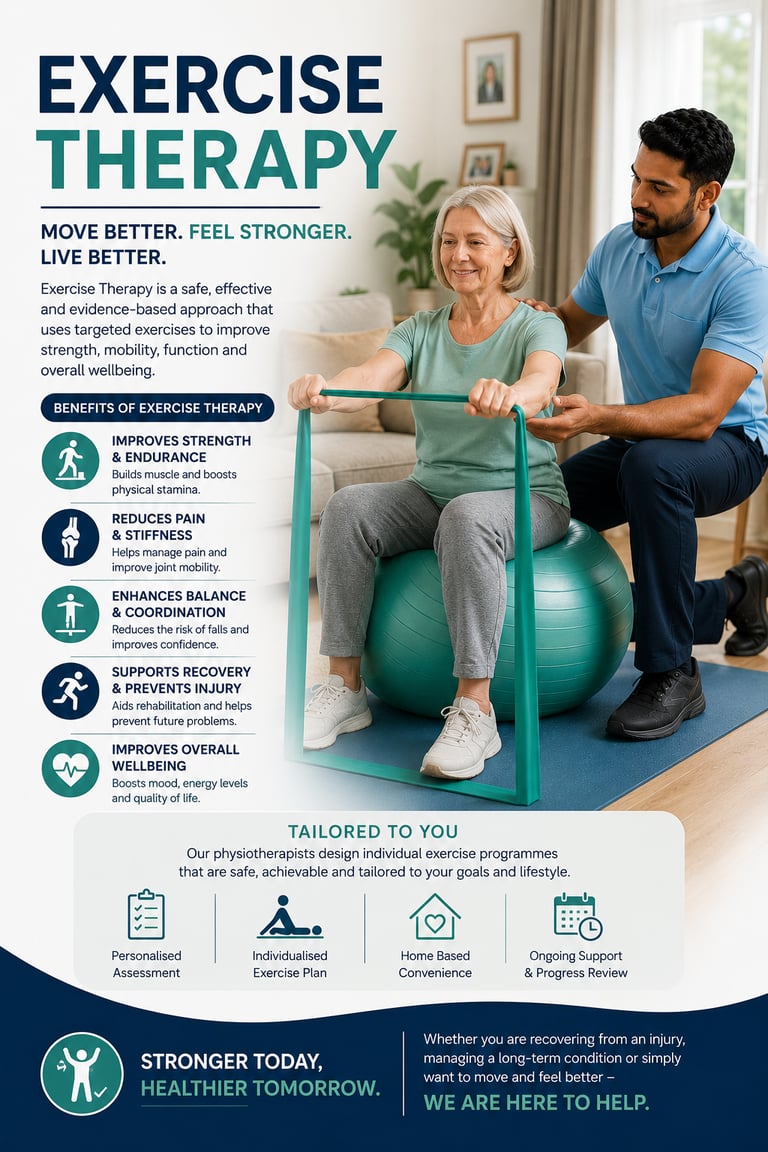
At Physio Network, we provide personalised Exercise Therapy at Home to help you recover from injury, manage pain, improve mobility, and regain independence. Every exercise programme is individually designed by our HCPC-registered physiotherapists to match your condition, fitness level, goals, and home environment.
Whether you are recovering from surgery, managing arthritis, rebuilding strength after illness, or improving balance and mobility, our evidence-based exercise programmes help you achieve lasting results safely in the comfort of your own home.
What is Exercise Therapy?
Exercise therapy is one of the most effective physiotherapy treatments for reducing pain, restoring movement, increasing strength, improving flexibility, and preventing future injuries.
Unlike generic exercise programmes found online, physiotherapy-led exercise therapy is based on a detailed assessment of your condition. Each exercise is carefully selected, progressed, and monitored to ensure maximum benefit while avoiding unnecessary strain or discomfort.
Your programme may include:
Strengthening exercises
Flexibility and stretching exercises
Joint mobility exercises
Balance and coordination training
Functional movement training
Core stability exercises
Postural correction exercises
Cardiovascular conditioning
Functional rehabilitation
Home exercise programmes
Conditions We Treat with Exercise Therapy
Exercise therapy is beneficial for a wide range of conditions, including:
Back and Neck Pain
Specific exercises strengthen supporting muscles, improve posture, reduce stiffness, and help prevent recurrent pain.
Arthritis
Targeted exercises improve joint movement, reduce stiffness, strengthen surrounding muscles, and maintain independence.
Sports Injuries
Progressive rehabilitation exercises restore strength, flexibility, balance, and confidence before returning to sport.
Post-Surgical Rehabilitation
Following orthopaedic surgery such as knee replacement, hip replacement, ligament reconstruction, or shoulder surgery, exercise therapy helps restore function safely.
Neurological Conditions
Exercise therapy improves movement, balance, coordination, strength, and functional independence in neurological conditions including stroke, Parkinson's disease, multiple sclerosis, and peripheral neuropathy.
Balance Problems and Falls
Specialised balance exercises improve stability, confidence, and reduce the risk of falls.
Muscle Weakness
Whether caused by illness, ageing, hospital admission, or inactivity, strengthening exercises help rebuild muscle function.
Osteoporosis
Weight-bearing and strengthening exercises improve bone health, posture, balance, and reduce fracture risk.
Chronic Pain
Regular graded exercise helps improve function, reduce pain sensitivity, increase activity levels, and improve quality of life.
Benefits of Exercise Therapy
A personalised exercise programme can help you:
Reduce pain naturally
Improve muscle strength
Increase joint flexibility
Restore normal movement
Improve posture
Improve balance and coordination
Reduce stiffness
Improve walking ability
Increase endurance
Prevent future injuries
Improve confidence
Increase independence
Support long-term health and wellbeing
Our Home Exercise Therapy Approach
Every treatment programme begins with a comprehensive physiotherapy assessment.
Initial Assessment
Your physiotherapist will assess:
Your symptoms
Medical history
Pain levels
Joint movement
Muscle strength
Balance
Walking pattern
Functional ability
Home environment
Personal goals
Individualised Exercise Programme
Your exercises are designed specifically for you. We carefully select exercises that are:
Safe
Effective
Easy to perform at home
Appropriate for your current ability
Progressive as you improve
Guided Supervised Sessions
Your physiotherapist demonstrates every exercise, ensuring:
Correct technique
Safe movement
Appropriate intensity
Confidence performing exercises independently
Progressive Rehabilitation
As your condition improves, your exercise programme is adjusted to continue challenging your muscles and joints safely, ensuring continuous progress.
Home Exercise Programme
You'll receive a personalised exercise programme that can be continued between appointments, helping you maintain improvements and recover more quickly.
Types of Exercises We Use
Depending on your condition, your programme may include:
Strengthening Exercises
Improve muscle power, endurance, and joint support.
Stretching Exercises
Increase flexibility and reduce muscle tightness.
Balance Training
Improve stability and reduce falls risk.
Core Stability Exercises
Strengthen the muscles supporting the spine and pelvis.
Functional Training
Practise everyday activities such as:
Standing up
Walking
Climbing stairs
Reaching
Lifting
Turning
Getting in and out of bed
Mobility Exercises
Restore normal joint movement and reduce stiffness.
Endurance Training
Improve cardiovascular fitness and reduce fatigue.
Why Choose Home Exercise Therapy?
Receiving physiotherapy in your own home offers many advantages.
Real-Life Rehabilitation
Exercises are practised in your own environment where you perform everyday activities.
Greater Convenience
No travel, parking, or waiting rooms.
Personalised Environment
Your physiotherapist can tailor exercises using your own furniture, stairs, and available space.
Family Involvement
Family members or carers can be involved in treatment to provide encouragement and assistance where appropriate.
Better Long-Term Results
Patients are often more confident continuing exercises when they have learned them within their own home.
Who Can Benefit?
Exercise therapy is suitable for:
Older adults
People recovering from surgery
Individuals with arthritis
People with neurological conditions
Those recovering after hospital discharge
Sports injury patients
Individuals with chronic pain
Office workers with postural problems
People with reduced mobility
Anyone wishing to improve strength, flexibility, and function
Why Choose Physio Network?
Our physiotherapists provide evidence-based, patient-centred care focused on helping you move better and live more independently.
We offer:
HCPC-registered physiotherapists
Chartered Physiotherapists
Personalised one-to-one treatment
Home visits across Hertfordshire
Evidence-based rehabilitation
Individual exercise programmes
Digital home exercise plans with clear guidance
Flexible appointment times
Ongoing progress reviews
Friendly, professional care
Frequently Asked Questions
How often should I perform my exercises?
Your physiotherapist will recommend a programme based on your condition, recovery stage, and personal goals. Some exercises may be completed daily, while others are performed several times a week.
Will the exercises be painful?
Some mild discomfort or muscle fatigue can be normal during rehabilitation, but exercises should not cause severe or worsening pain. Your physiotherapist will adjust your programme if needed.
Do I need special equipment?
Most exercises can be completed using everyday household items. If additional equipment such as resistance bands, ankle weights, or exercise balls would be beneficial, your physiotherapist will advise you.
How quickly will I notice improvement?
Many people notice improvements within a few weeks, although recovery times vary depending on the condition, severity, and consistency with the exercise programme.
Can exercise therapy prevent future injuries?
Yes. Strengthening weak muscles, improving flexibility, enhancing balance, and correcting movement patterns can significantly reduce the risk of future injuries and recurring pain.
Book Your Home Exercise Therapy Appointment
Whether you are recovering from injury, surgery, illness, or simply looking to improve your mobility and strength, our experienced physiotherapists are here to help.
Contact Physio Network today to book your home exercise therapy assessment and start your journey towards stronger movement, improved function, and greater independence—all from the comfort of your own home.Neurological Weakness & Deconditioning Physiotherapy at Home
Weakness and physical deconditioning are common following neurological conditions, prolonged illness, hospitalisation, or reduced activity levels. They can make everyday tasks such as walking, climbing stairs, getting out of a chair, or carrying out personal care increasingly difficult, reducing confidence and independence.
At Physio Network, we provide expert home-based physiotherapy for people experiencing neurological weakness and deconditioning across Hertfordshire. Our experienced physiotherapists create personalised rehabilitation programmes that focus on rebuilding strength, improving mobility, restoring function, and helping you return to your everyday activities safely.
Whether your weakness is caused by a stroke, Parkinson's disease, Multiple Sclerosis, a brain or spinal cord injury, or a prolonged period of inactivity, we are here to support your recovery in the comfort of your own home.
What is Neurological Weakness and Deconditioning?
Neurological weakness occurs when a condition affecting the brain, spinal cord, or nerves reduces the ability of muscles to contract effectively. This can lead to reduced strength, impaired coordination, slower movement, and difficulty performing everyday tasks.
Deconditioning refers to the loss of muscle strength, endurance, flexibility, and physical fitness that occurs after prolonged inactivity, illness, surgery, or bed rest. It often develops alongside neurological conditions and can further limit mobility and independence.
Physiotherapy plays a vital role in restoring function, improving strength, and helping individuals regain confidence in movement.
Common Causes of Neurological Weakness and Deconditioning
Neurological weakness and deconditioning may occur following:
Stroke
Parkinson's disease
Multiple sclerosis (MS)
Motor neurone disease (MND)
Brain injury
Spinal cord injury
Peripheral neuropathy
Guillain-Barré syndrome
Functional neurological disorder (FND)
Long hospital stays
Critical illness or intensive care admission
Prolonged bed rest
Severe infections
Age-related muscle loss (sarcopenia)
Regardless of the cause, early rehabilitation can significantly improve physical function and reduce long-term disability.
Common Symptoms
People with neurological weakness and deconditioning may experience:
General muscle weakness
Difficulty walking
Poor balance
Reduced endurance
Fatigue
Difficulty climbing stairs
Difficulty standing from a chair
Reduced coordination
Slow movement
Difficulty with transfers
Muscle stiffness
Reduced flexibility
Increased risk of falls
Reduced confidence with mobility
Difficulty performing everyday activities
Why Choose Home Physiotherapy?
Home physiotherapy allows rehabilitation to focus on the activities and movements you perform every day, helping you regain confidence and independence in your own environment.
Benefits include:
Personalised one-to-one rehabilitation
Treatment in familiar surroundings
Functional training using your own home
Reduced need for travel
Home safety assessments
Falls prevention advice
Family and carer involvement
Flexible appointment times
How Physiotherapy Helps
Physiotherapy aims to improve strength, endurance, balance, mobility, and confidence while helping you return to everyday activities safely.
Treatment focuses on:
Improving muscle strength
Restoring walking ability
Increasing endurance
Improving balance
Enhancing coordination
Reducing falls
Improving flexibility
Promoting safe transfers
Increasing confidence
Maximising independence
Each rehabilitation programme is carefully tailored to your diagnosis, current ability, and personal goals.
Common Problems We Treat
General Muscle Weakness
Weakness can affect your ability to walk, stand, lift objects, or perform everyday activities. Progressive strengthening exercises help improve muscle function and restore independence.
Walking Difficulties
Neurological weakness often causes slower, less stable walking. We provide gait retraining to improve walking pattern, confidence, endurance, and safety.
Balance Problems
Poor balance increases the risk of falls and limits confidence with movement. We deliver structured balance exercises to improve stability during standing, walking, and everyday activities.
Reduced Endurance
After illness or prolonged inactivity, even simple activities can become tiring. Our graded exercise programmes gradually improve stamina and physical fitness while respecting your energy levels.
Difficulty with Transfers
Getting in and out of bed, standing from a chair, or transferring safely may become challenging. We teach effective movement techniques and practise functional transfers to improve independence.
Muscle Stiffness
Some neurological conditions cause increased muscle tone or reduced flexibility. Stretching and mobility exercises help maintain joint movement and improve comfort.
Reduced Coordination
Weakness affecting the nervous system may impair movement control and accuracy. Coordination exercises improve functional movement and confidence during everyday tasks.
Falls Prevention
Reduced strength and balance significantly increase the risk of falls. We identify fall risks, improve mobility, and provide practical advice to help you move safely at home.
Our Home Physiotherapy Assessment
During your first appointment, our physiotherapist will complete a comprehensive assessment, including:
Medical history
Neurological condition and symptoms
Muscle strength assessment
Walking assessment
Balance assessment
Coordination testing
Joint range of movement
Functional mobility assessment
Transfer assessment
Endurance assessment
Falls risk assessment
Home environment assessment
Personal rehabilitation goals
Following the assessment, we will develop a personalised treatment programme designed around your individual needs.
Physiotherapy Management at Home
Our evidence-based rehabilitation programmes are designed to improve physical function and help you regain independence.
Treatment may include:
Progressive Strengthening Exercises
Individualised resistance exercises to improve muscle strength, functional performance, and confidence with movement.
Functional Mobility Training
Practising everyday tasks such as standing up, walking, climbing stairs, bed mobility, and household activities.
Gait Re-education
Improving walking pattern, speed, endurance, and safe use of walking aids where appropriate.
Balance Rehabilitation
Exercises to improve postural control, weight shifting, and stability during functional activities.
Endurance Training
Graded aerobic exercise programmes that improve cardiovascular fitness and reduce physical deconditioning.
Flexibility and Stretching Exercises
Maintaining joint mobility, reducing muscle stiffness, and preventing contractures where appropriate.
Coordination Training
Exercises designed to improve movement control, timing, and functional performance.
Transfer Training
Teaching safe and efficient techniques for moving between bed, chair, toilet, wheelchair, and other everyday surfaces.
Falls Prevention Education
Advice on home safety, walking aids, footwear, environmental hazards, and strategies to reduce the risk of falls.
Home Exercise Programme
You will receive a personalised exercise programme with clear instructions to help maintain progress between physiotherapy visits and encourage long-term recovery.
Benefits of Physiotherapy
Regular physiotherapy can help:
Increase muscle strength
Improve walking ability
Enhance balance
Improve endurance
Increase confidence
Reduce the risk of falls
Improve flexibility
Improve coordination
Restore independence
Enhance quality of life
Why Choose Physio Network?
HCPC-registered physiotherapists
Experienced in neurological rehabilitation
Personalised one-to-one home visits
Evidence-based rehabilitation programmes
Goal-focused treatment plans
Flexible appointments
Family and carer education
Comprehensive home mobility assessments
Ongoing progress reviews
Serving patients across Hertfordshire
Rebuild Your Strength and Independence
Neurological weakness and physical deconditioning can affect every aspect of daily life, but with the right rehabilitation, significant improvements in strength, mobility, and confidence are possible. Early intervention and consistent physiotherapy can help you regain independence and achieve your personal goals.
At Physio Network, we are dedicated to providing compassionate, evidence-based home physiotherapy tailored to your needs. We work alongside you to help restore movement, improve function, and support your long-term wellbeing.
Book your home neurological weakness and deconditioning physiotherapy assessment today and let our experienced physiotherapists help you regain your strength, improve your mobility, and return to living independently with confidence.
E-mail : info@physionetwork.co.uk
Professional Home Physiotherapy Services Across Hertfordshire
© 2026 Physio Network UK. All Rights Reserved.
HCPC Registered Physiotherapist | NHS Experienced | DBS Checked | Fully Insured