Exercises Commonly Used During Stroke Rehabilitation
Physiotherapy exercises are an essential component of stroke recovery. They help improve strength, balance, mobility, coordination, and overall function. Through regular practice, patients can regain lost abilities and increase their independence.
6/24/20263 min read
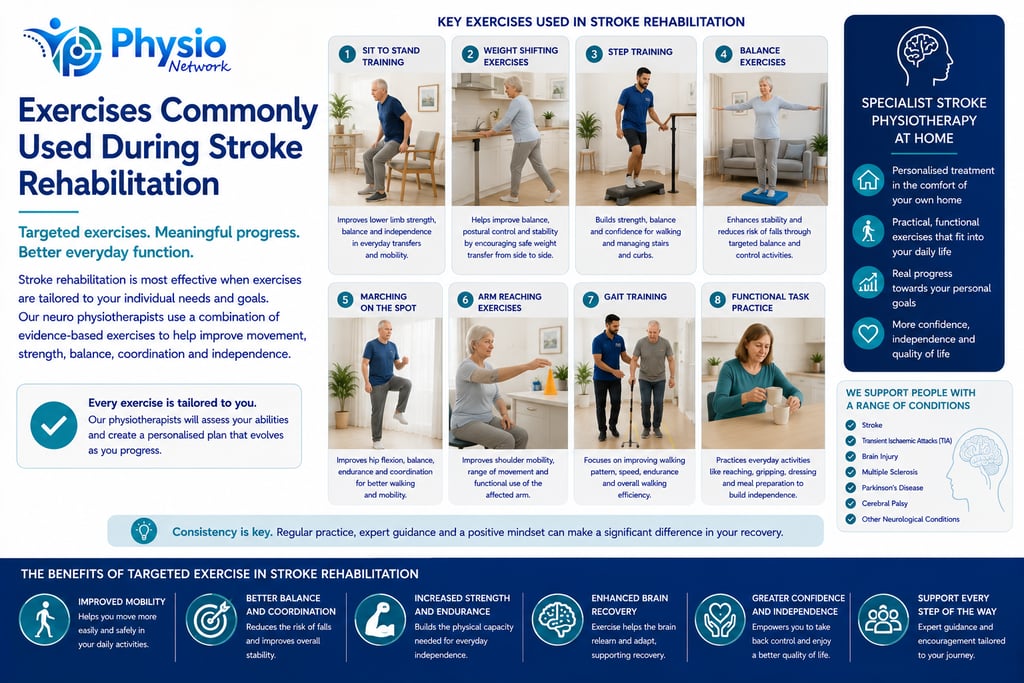
Exercises Commonly Used During Stroke Rehabilitation
Stroke is one of the leading causes of long-term disability, affecting movement, balance, coordination, speech, and independence. While every stroke is different, early and consistent rehabilitation plays a vital role in helping individuals regain function and improve their quality of life. Physiotherapy is at the heart of this recovery process, using targeted exercises to promote healing, restore movement, and encourage the brain to form new neural connections—a process known as neuroplasticity.
At Physio Network, we provide home-based stroke physiotherapy across Hertfordshire, delivering personalised rehabilitation programmes in the comfort and familiarity of your own home.
Why Exercise Is Important After a Stroke
Following a stroke, many people experience muscle weakness, reduced coordination, joint stiffness, and difficulty with everyday activities such as walking, standing, or getting dressed. Without regular movement, these problems can worsen over time.
Physiotherapy exercises help to:
Improve muscle strength and endurance
Restore joint flexibility and mobility
Enhance balance and coordination
Improve walking ability
Reduce the risk of falls
Increase independence in daily activities
Promote confidence and overall wellbeing
Each rehabilitation programme is carefully tailored to the individual's abilities, goals, and stage of recovery.
Strengthening Exercises
Muscle weakness is common after a stroke, particularly on one side of the body. Strengthening exercises help rebuild muscle function and improve the ability to perform everyday tasks.
Examples include:
Sit-to-stand exercises
Leg strengthening using body weight or resistance bands
Heel raises
Mini squats (where appropriate)
Shoulder strengthening exercises
Arm reaching exercises
Grip strengthening using therapy putty or soft balls
These exercises improve mobility, support better posture, and increase functional independence.
Range of Movement Exercises
Reduced movement following a stroke can lead to joint stiffness, muscle tightness, and pain. Gentle range of movement exercises help maintain flexibility and prevent complications such as contractures.
These may include:
Shoulder movements
Elbow and wrist mobility exercises
Finger stretching
Hip and knee movements
Ankle mobility exercises
Depending on the patient's ability, exercises may be performed actively, with assistance, or passively by a physiotherapist or caregiver.
Balance Training
Balance problems significantly increase the risk of falls after a stroke. Improving balance is a major focus of physiotherapy rehabilitation.
Balance exercises may include:
Standing with feet together
Weight-shifting exercises
Single-leg standing (when appropriate)
Stepping exercises
Reaching while standing
Dynamic balance activities
As balance improves, exercises become more challenging to build confidence and stability.
Walking (Gait) Training
Walking difficulties are common after a stroke due to muscle weakness, poor coordination, or reduced balance. Gait training helps patients regain a safer and more efficient walking pattern.
Walking rehabilitation may include:
Weight transfer exercises
Step training
Walking with appropriate mobility aids
Stair practice
Obstacle negotiation
Turning and directional changes
Endurance walking
Physiotherapists closely monitor walking technique to encourage safe and efficient movement.
Task-Specific Training
One of the most effective rehabilitation approaches after stroke is practising real-life activities repeatedly. This helps retrain the brain while improving confidence and independence.
Task-specific training may involve:
Standing up from a chair
Sitting down safely
Climbing stairs
Getting in and out of bed
Reaching for household objects
Carrying light items
Dressing and personal care activities
Repeated practice helps strengthen movement patterns and supports functional recovery.
Coordination Exercises
Many stroke survivors experience reduced coordination, making everyday movements difficult.
Exercises may include:
Reaching and placing objects
Hand-eye coordination tasks
Ball exercises
Finger dexterity activities
Alternating arm and leg movements
Functional reaching exercises
These activities improve control, accuracy, and confidence during daily tasks.
Functional Mobility Exercises
Regaining independence often involves improving the ability to move safely around the home.
Functional mobility exercises focus on:
Bed mobility
Rolling
Sitting balance
Transfers between bed and chair
Safe standing
Walking around the home
Home-based physiotherapy allows these exercises to be practised in the actual environment where patients live, making rehabilitation highly practical and relevant.
Cardiovascular Conditioning
As recovery progresses, improving cardiovascular fitness becomes increasingly important.
Suitable activities may include:
Walking programmes
Stationary cycling
Step exercises
Low-impact aerobic activities
Improving endurance helps patients return to everyday activities with less fatigue.
The Benefits of Home-Based Stroke Physiotherapy
Recovering at home offers several unique advantages. Exercises can be integrated into daily routines, allowing patients to practise meaningful tasks within their own environment. Home physiotherapy also enables therapists to identify potential hazards, recommend equipment, and adapt exercises to suit the individual's living space.
Benefits include:
Personalised one-to-one rehabilitation
Greater comfort and convenience
Improved confidence in familiar surroundings
Practical training using the patient's own furniture and environment
Family and caregiver education
Flexible treatment plans tailored to progress
How Physio Network Can Help
At Physio Network, we specialise in providing Stroke Physiotherapy Home Visits throughout Hertfordshire. Our experienced physiotherapists develop personalised, evidence-based rehabilitation programmes designed to maximise recovery, improve mobility, and help patients regain independence.
Whether you are recovering from a recent stroke or require ongoing neurological rehabilitation, we are committed to supporting you every step of the way with compassionate, professional care delivered in your own home.
Begin Your Stroke Recovery Journey Today
Stroke recovery is a gradual process, but with the right rehabilitation programme and consistent physiotherapy, significant improvements are possible. Early intervention, regular exercise, and expert guidance can make a meaningful difference to mobility, confidence, and quality of life.
If you or a loved one requires professional stroke rehabilitation at home, Physio Network is here to help.
Visit: www.physionetwork.co.uk to learn more about our Stroke Physiotherapy Home Visits and book an assessment today.
E-mail : info@physionetwork.co.uk
Professional Home Physiotherapy Services Across Hertfordshire
© 2026 Physio Network UK. All Rights Reserved.
HCPC Registered Physiotherapist | NHS Experienced | DBS Checked | Fully Insured