

Electrotherapy at Home
Advanced Electrotherapy Treatments to Support Your Recovery
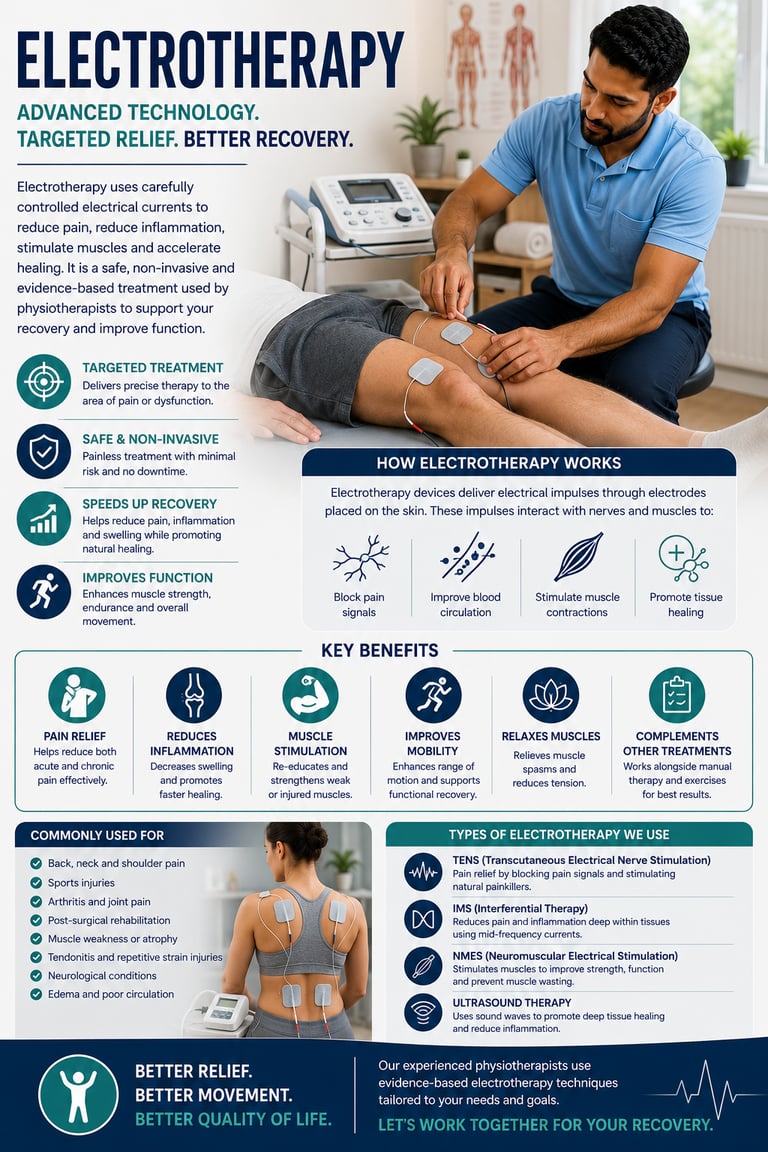
At Physio Network, we provide a range of electrotherapy treatments at home to complement your physiotherapy programme. Electrotherapy uses electrical, sound, heat, or cold energy to help reduce pain, promote healing, improve muscle function, and support rehabilitation.
Electrotherapy is not used as a standalone treatment. Instead, it is carefully selected by our HCPC-registered physiotherapists when clinically appropriate and combined with hands-on physiotherapy, exercise therapy, and patient education to achieve the best possible outcomes.
Our portable equipment allows us to deliver safe and effective electrotherapy treatments in the comfort of your own home.
What is Electrotherapy?
Electrotherapy refers to a range of therapeutic modalities that use electrical stimulation, ultrasound, heat, or cold to assist the body's natural healing process.
Depending on your condition, electrotherapy may help:
Reduce pain
Decrease muscle spasm
Improve circulation
Promote tissue healing
Reduce swelling
Improve muscle strength
Re-educate weakened muscles
Improve joint movement
Support functional recovery
Your physiotherapist will determine whether electrotherapy is appropriate following a comprehensive assessment.
Electrotherapy Treatments We Provide
Transcutaneous Electrical Nerve Stimulation (TENS)
TENS is commonly used for pain relief by delivering gentle electrical impulses through electrodes placed on the skin.
TENS may help with:
Back pain
Neck pain
Arthritis
Joint pain
Sciatica
Chronic musculoskeletal pain
Post-operative pain
Benefits include:
Temporary pain relief
Reduced muscle spasm
Improved comfort during movement
Increased ability to participate in exercise therapy
Therapeutic Ultrasound
Therapeutic ultrasound uses high-frequency sound waves to stimulate healing within soft tissues.
It may be used for:
Tendon injuries
Ligament sprains
Muscle strains
Scar tissue management
Soft tissue inflammation
Chronic tendon disorders
Potential benefits include:
Improved tissue healing
Increased blood flow
Reduced pain
Improved tissue flexibility
Ultrasound is only used when clinically indicated and supported by your assessment findings.
Functional Electrical Stimulation (FES)
Functional Electrical Stimulation (FES) uses electrical impulses to activate weakened or paralysed muscles, helping improve movement and functional ability.
FES may be beneficial for people with:
Stroke
Multiple sclerosis
Spinal cord injuries
Peripheral nerve injuries
Foot drop
Muscle weakness following neurological conditions
Benefits may include:
Improved muscle activation
Enhanced walking ability
Reduced muscle wasting
Improved functional independence
Better movement patterns
Heat Therapy
Heat therapy helps relax muscles, improve circulation, and reduce joint stiffness.
It is commonly used for:
Chronic muscle tightness
Osteoarthritis
Back pain
Neck pain
Muscle stiffness
Joint stiffness
Benefits include:
Muscle relaxation
Improved flexibility
Reduced pain
Increased blood circulation
Improved comfort before exercise or manual therapy
Cold Therapy (Cryotherapy)
Cold therapy is commonly used during the early stages of injury or following physical activity to help reduce inflammation and pain.
It may be beneficial for:
Acute sprains
Muscle strains
Sports injuries
Swelling
Tendon injuries
Post-operative rehabilitation
Benefits include:
Reduced inflammation
Pain relief
Decreased swelling
Reduced muscle spasm
Infrared Radiation (IRR) Therapy
Infrared Radiation Therapy uses gentle radiant heat to warm superficial tissues and improve circulation.
It may be used for:
Muscle stiffness
Chronic joint pain
Soft tissue tightness
Osteoarthritis
Chronic back and neck pain
Benefits include:
Improved circulation
Muscle relaxation
Reduced pain
Increased tissue flexibility
Improved preparation for manual therapy and exercise
Faradism Under Pressure
Faradism Under Pressure combines electrical muscle stimulation with external compression to assist muscle contraction and reduce swelling.
It may be considered for selected patients with:
Limb oedema
Reduced muscle pump function
Muscle weakness
Prolonged immobilisation
Certain post-operative conditions
Potential benefits include:
Improved venous and lymphatic return
Reduction in swelling
Enhanced muscle contraction
Improved circulation
Support for functional rehabilitation
This treatment is only provided after careful clinical assessment and where appropriate for your condition.
Conditions That May Benefit from Electrotherapy
Electrotherapy may be used alongside physiotherapy for:
Back pain
Neck pain
Shoulder pain
Hip pain
Knee pain
Sports injuries
Tendon injuries
Muscle strains
Ligament sprains
Arthritis
Post-operative rehabilitation
Stroke rehabilitation
Neurological conditions
Chronic pain
Muscle weakness
Joint stiffness
Our Approach to Electrotherapy
Every treatment begins with a comprehensive physiotherapy assessment.
Your physiotherapist will determine:
Whether electrotherapy is appropriate
Which modality is most suitable
The safest treatment settings
How electrotherapy fits into your overall rehabilitation programme
Electrotherapy is always combined with evidence-based physiotherapy treatments, including:
Manual therapy
Exercise therapy
Mobility training
Strengthening exercises
Balance rehabilitation
Functional retraining
Education and self-management advice
This integrated approach provides the best opportunity for lasting recovery.
Why Choose Electrotherapy at Home?
Receiving treatment at home offers several advantages.
Convenient Care
Receive advanced physiotherapy treatments without travelling to a clinic.
Personalised Treatment
Every electrotherapy programme is tailored to your individual condition and rehabilitation goals.
One-to-One Physiotherapy
Your physiotherapist provides dedicated care throughout every treatment session.
Integrated Rehabilitation
Electrotherapy is combined with hands-on treatment and exercise to maximise your recovery.
Why Choose Physio Network?
We deliver evidence-based physiotherapy using the latest rehabilitation techniques and portable electrotherapy equipment.
Our service includes:
HCPC-registered physiotherapists
Chartered Physiotherapists
Home visits across Hertfordshire
Individual treatment programmes
Advanced electrotherapy modalities
Manual therapy
Exercise rehabilitation
Digital home exercise programmes
Flexible appointment times
Ongoing progress reviews
Frequently Asked Questions
Is electrotherapy safe?
Yes. Electrotherapy is safe when delivered by a qualified physiotherapist following a thorough assessment. We will explain the treatment, check for any contraindications, and ensure it is appropriate for your condition.
Will every patient receive electrotherapy?
No. Electrotherapy is only used when there is a clear clinical indication. Many patients recover successfully with exercise therapy, manual therapy, education, and rehabilitation alone.
Does electrotherapy replace exercise?
No. Exercise therapy remains one of the most effective treatments for most musculoskeletal and neurological conditions. Electrotherapy is used as an additional treatment to support your recovery where appropriate.
Are the treatments painful?
Most electrotherapy treatments are comfortable. Some, such as TENS or FES, produce a tingling or muscle contraction sensation, which is adjusted to a comfortable level.
Book Your Home Electrotherapy Appointment
If you are recovering from an injury, surgery, neurological condition, or persistent pain, our experienced physiotherapists can assess whether electrotherapy could support your rehabilitation.
Contact Physio Network today to arrange your home physiotherapy assessment and receive a personalised treatment programme designed to reduce pain, restore movement, and help you return to the activities that matter most.
E-mail : info@physionetwork.co.uk
Professional Home Physiotherapy Services Across Hertfordshire
© 2026 Physio Network UK. All Rights Reserved.
HCPC Registered Physiotherapist | NHS Experienced | DBS Checked | Fully Insured